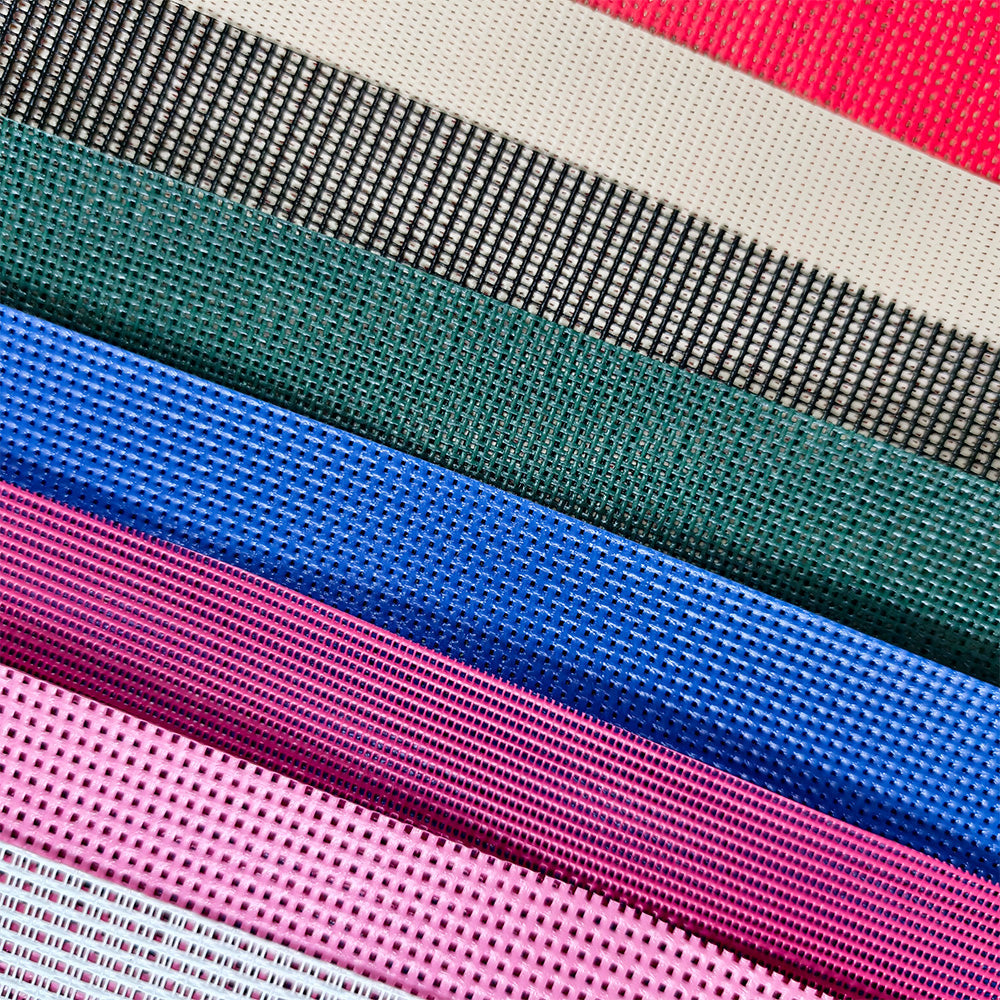
PVC mesh fabric has become one of the most widely used materials in outdoor, industrial, and advertising applications. From fence screens and truck side curtains to printable banners and ventilation systems, PVC mesh offers an excellent balance of durability, airflow, UV resistance, and long-term outdoor performance.
However, choosing the right PVC mesh fabric is not always straightforward. Different weights, yarn densities, coating technologies, and mesh openness levels can significantly affect performance.
What Is PVC Mesh Fabric?
PVC mesh fabric, also known as PVC coated mesh or vinyl-coated polyester mesh, is a technical textile made by coating a high-strength polyester scrim with PVC (Polyvinyl Chloride) while maintaining an open mesh structure.
Unlike solid PVC tarpaulin materials, PVC mesh contains small perforations or openings that allow air circulation. This unique structure makes the material especially suitable for applications requiring:
- Ventilation
- Wind resistance
- Lightweight strength
- Outdoor durability
- Large-format printing
- UV protection
The polyester base fabric provides tensile strength, while the PVC coating enhances weather resistance, waterproof performance, weldability, and service life.
How Is PVC Mesh Fabric Manufactured?
The quality of PVC mesh fabric largely depends on its manufacturing process.
A standard PVC mesh structure includes:
1. Polyester Base Fabric
The internal scrim provides strength and dimensional stability.
Common specifications include:
- 1000D × 1000D
- High-density industrial yarn constructions
Higher yarn density generally improves:
- Tensile strength
- Tear resistance
- Dimensional stability
- Long-term durability
2. PVC Coating Process
PVC resin is coated onto the polyester mesh to improve:
- UV resistance
- Waterproof performance
- Weather resistance
- Flame retardancy (optional)
- Heat welding performance
High-quality coating technology helps prevent cracking, peeling, or premature aging in outdoor environments.
3. Surface Treatments
Depending on the application, additional treatments may include:
- Anti-UV coating
- Anti-fungal treatment
- Flame-retardant finish
- Anti-static properties
- Printable surface optimization
For demanding industrial projects, flame-retardant standards such as B1, B2, or NFPA 701 may be required.
Key Benefits of PVC Mesh Fabric
Excellent Outdoor Durability
PVC mesh fabric is designed for long-term outdoor exposure.
A properly engineered PVC coated mesh can resist:
- Rain and moisture
- UV degradation
- Temperature changes
- Wind pressure
- Surface wear
This makes it a preferred solution for long-term outdoor installations.
Lightweight but Strong
Compared with solid PVC fabrics of similar strength, mesh materials are significantly lighter due to their open structure.
For many industrial applications, this can provide:
- Easier installation
- Reduced structural load
- Better wind resistance
- Lower transportation costs
In truck and transportation industries, lighter materials can also contribute to improved operational efficiency.
Better Airflow & Wind Resistance
Unlike blockout materials, PVC mesh allows air to pass through.
This feature helps reduce wind load, making PVC mesh suitable for:
- Fence screens
- Construction barriers
- Outdoor banners
- Ventilation systems
- Shade structures
Excellent Printing Performance
Printable PVC mesh is widely used in digital printing and outdoor advertising.
Its perforated structure allows large banners to remain stable in windy conditions while maintaining good image visibility.
PVC mesh can support:
- Solvent printing
- UV printing
- Latex printing
- Large-format digital graphics
Main Applications of PVC Mesh Fabric
1. PVC Mesh for Fence & Privacy Screens
One of the fastest-growing applications is fencing.
PVC mesh is commonly used for:
- Construction fence screens
- Privacy barriers
- Garden fencing
- Windbreak systems
- Dust protection
Benefits include:
- Wind permeability
- UV resistance
- Lightweight installation
- Long outdoor service life
For higher privacy requirements, lower openness mesh structures are often preferred.
2. PVC Mesh for Printing & Advertising
Printable mesh banners are widely used in outdoor advertising.
Common applications include:
- Building wraps
- Event banners
- Construction advertising
- Stadium graphics
- Outdoor signage
Compared with traditional banner fabric, mesh materials perform better in windy areas because they reduce wind resistance.
3. PVC Mesh for Truck Side Curtains
In transportation industries, PVC mesh can be used for truck curtain systems and ventilation covers.
Key performance requirements include:
- Tear resistance
- Welding strength
- UV resistance
- Dimensional stability
- Long-term durability
A strong welding performance is especially important for long-term use.
4. PVC Mesh for Ventilation Systems
PVC mesh fabrics are increasingly used in:
- Agricultural facilities
- Livestock curtains
- Warehouse ventilation
- Temporary partitions
- Industrial airflow systems
The breathable structure allows airflow while maintaining protection from sunlight and debris.
5. PVC Mesh for Shade Structures
PVC mesh can also be used in:
- Outdoor shade systems
- Pergolas
- Canopies
- Sun protection structures
The fabric helps reduce sunlight intensity while maintaining ventilation and comfort.
Pros and Cons of PVC Mesh Fabric
Advantages
✔ Lightweight but durable
✔ UV resistant
✔ Good airflow
✔ Wind resistant
✔ Printable
✔ Suitable for outdoor applications
✔ Heat weldable
✔ Long service life
Limitations
✘ Not fully blockout
✘ Lower privacy than solid fabrics
✘ Not ideal for complete waterproof enclosure applications
Understanding both strengths and limitations helps buyers choose the right material for the right application.
How Long Does PVC Mesh Last Outdoors?
Outdoor lifespan depends on several factors:
- PVC coating quality
- UV treatment
- Fabric strength
- Climate conditions
- Installation method
High-quality PVC mesh fabrics with proper UV stabilization can deliver reliable long-term outdoor performance.
For industrial applications, selecting a premium-grade material often results in lower replacement costs over time.
How to Choose the Right PVC Mesh Fabric
When selecting PVC mesh, consider the following:
1. Weight (GSM)
Heavier materials generally provide:
- Better durability
- Higher strength
- Improved lifespan
Lighter materials may be preferable when weight reduction matters.
2. Yarn Strength
Higher denier polyester yarns improve:
- Tensile strength
- Tear resistance
- Dimensional stability
3. UV Resistance
For outdoor projects, strong UV protection is essential for long-term performance.
4. Printing Requirements
If digital printing is required, select mesh optimized for print quality and ink adhesion.
5. Flame Retardancy
Some commercial or industrial projects require fire-retardant certifications.
Frequently Asked Questions
Is PVC mesh fabric waterproof?
PVC mesh is water-resistant, but because of its perforated structure, it is not fully waterproof like solid PVC tarpaulin.
Can PVC mesh be printed in detail?
Yes. Printable PVC mesh is commonly used for high-resolution outdoor graphics and large-format advertising.
Is PVC mesh UV resistant?
High-quality PVC mesh fabrics are designed with UV-resistant properties for outdoor use.
What GSM is best for PVC mesh?
The ideal weight depends on the application. Fence screens, banners, and truck systems often require different specifications.
Why Choose uctextile PVC Mesh?
At uctextile, we focus on high-performance PVC coated materials for demanding industrial applications.
Our PVC mesh fabrics are designed for:
- Outdoor durability
- Strong welding performance
- UV resistance
- Dimensional stability
- Custom specifications
- Printable and industrial applications
We support a wide range of markets including fencing, truck covers, outdoor advertising, ventilation systems, and architectural textile applications.
Final Thoughts
PVC mesh fabric continues to grow in popularity because it combines strength, airflow, and outdoor durability in a lightweight structure.
Whether used for fencing, advertising, truck systems, or ventilation, selecting the right PVC mesh specification can significantly improve long-term performance and reduce maintenance costs.
Understanding fabric weight, yarn quality, UV resistance, and application requirements is the key to making the right choice.
If you are looking for customized PVC mesh fabric solutions, the team at uctextile can help you identify the right material for your project.
Share:
PVC Coated Mesh: Complete Guide to Features, Applications, and Benefits
PVC Free Fabric Is Changing Tensile Architecture—But Not in the Way Most People Think