
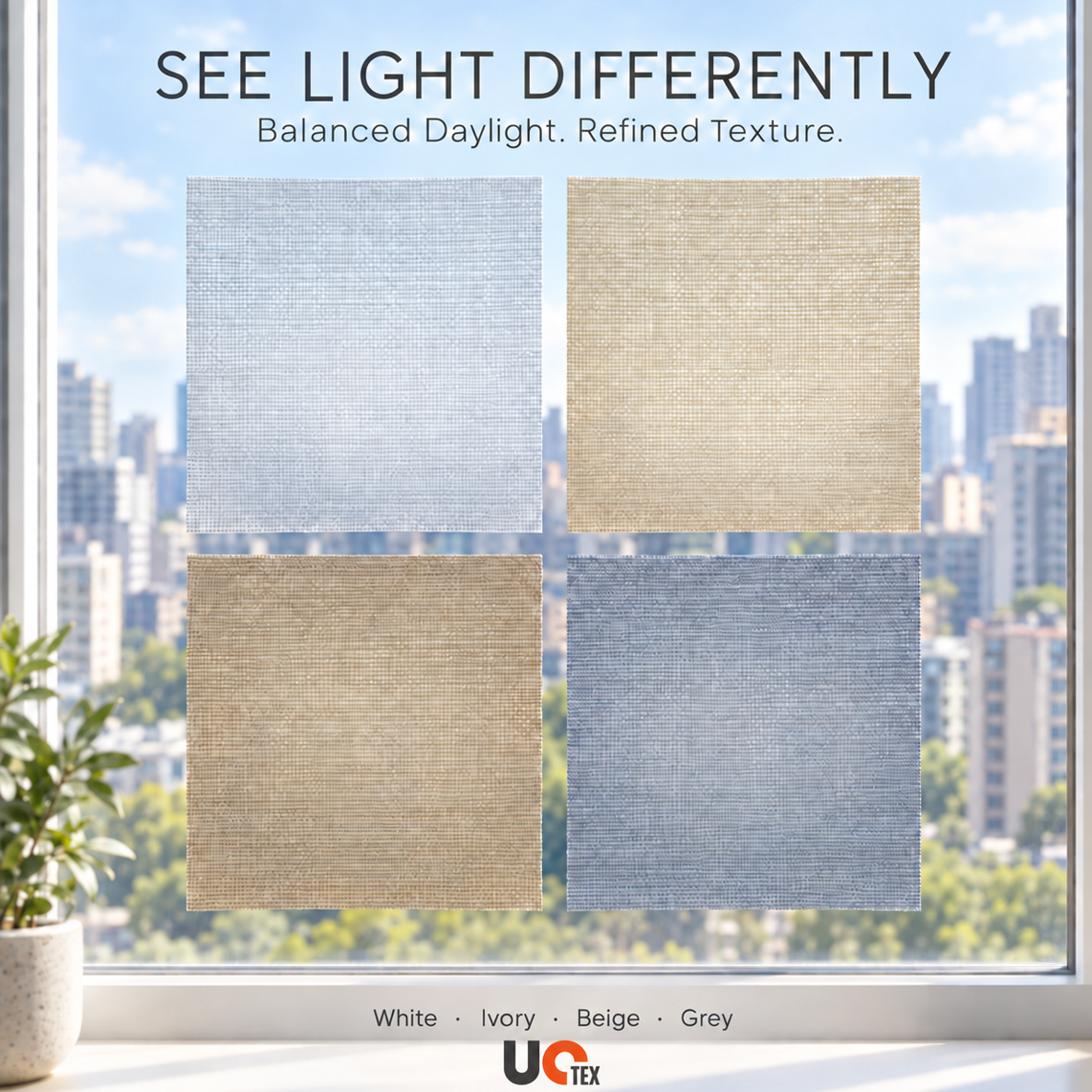
A fence screen and an outdoor shade panel may look similar when reduced to a small fabric sample. On site, they have different jobs. One may need to carry a printed message across a long, exposed fence. The other has to make an occupied space more comfortable without closing it in. A facade adds another set of questions about appearance, fixing and structural design.
It is tempting to start with the most visible property of the fabric: the holes. Open area matters, but it cannot answer every question about shade or performance. Buyers get a better result when they treat it as one part of the specification.
What does open area tell you?
Open area, sometimes called the openness factor, is the proportion of the fabric surface occupied by openings. A more open construction generally allows more direct view, light and air through the material. A tighter construction usually provides more visual screening and reduces the direct light passing through the openings.
That description is useful for comparing samples, but the number needs context. Yarn size, weave, coating and the shape of the openings can change how two fabrics with a similar stated open area look and behave. A percentage alone does not describe the strength of the yarns or the finished panel.
If a supplier quotes an open area, ask whether it is a measured value for the exact construction and color being offered. Keep the sample and its data sheet together; a photograph of the mesh is a poor substitute for either.
Open area is not a shade rating
The open portion of a mesh lets direct light pass. The coated yarns also interact with sunlight through reflection, absorption and transmission. Color changes that interaction, while the angle of the sun changes what reaches the area beneath or behind the fabric. This is why it is unsafe to take an open area percentage, subtract it from 100 and present the result as a tested shade percentage.
It also helps to distinguish shade from light transmission. A space can feel noticeably shaded while still receiving daylight. A dark mesh and a light mesh of similar construction may give a different impression when viewed from inside, and a sample held in your hand will not reproduce the scale or orientation of the installation.
For a project with a stated solar or daylight target, request data for the proposed fabric and the relevant test conditions. If that data is not available, describe the intended effect as a design goal rather than a guaranteed percentage.
What changes from one application to another?
Construction fence screens: start with the panel and the site
For a fence, the buyer may care about screening, print visibility or both. A relatively open mesh may let more air through, but a large installed panel still transfers loads to its edges, fixings and supporting fence. Wind exposure, panel dimensions and the fixing method matter. Open area by itself cannot establish a safe installation.
For printed fence screens, check the artwork on the actual mesh at a realistic viewing distance. Very fine details can lose impact against the openings. Confirm print compatibility and finishing requirements with the printer or fabricator before placing a production order. For more on that separate topic, see Can Mesh PVC Be Printed?.
Outdoor shade: decide what the people underneath need
For a terrace or garden structure, the useful question is not simply “How much does it block?” Ask whether the space needs strong shade at a particular time of day, an open view, air movement or a particular color effect. The answer will change the preferred mesh construction.
Check a full-size sample in the intended orientation if possible. A material that looks dense on a vertical display board may feel quite different when mounted above a seating area. Remember that an open mesh is not a waterproof roof. If rain protection is required, specify that function separately.
Agricultural projects need another level of care. A visual impression of shade is not a substitute for the light conditions required by a crop. State the target growing conditions and request relevant light or shade data. Depending on the application, a purpose-designed HDPE shade net may be the more appropriate product category.
Facades: appearance is only one part of the system
On a building, the chosen mesh has to work at two distances. Close up, people see the texture and openings; farther away, they read the color and the facade as a whole. Visibility through the fabric also changes with the lighting on each side. A daytime sample cannot establish a fixed level of privacy after dark.
The fabric must also suit the panel size and the specified tensioning or fixing system. Tensile strength, tear resistance, dimensional behavior, seam or edge preparation, and any project-specific fire requirements should be reviewed for the actual design. Facade and other exposed structural installations require assessment by the project’s qualified designer or engineer.
A better way to compare PVC mesh samples
Before asking for a price per square meter, give the supplier a brief that describes the finished use:
- Application and location: fence, overhead shade, facade or another use; indoor or outdoor; local exposure conditions.
- Panel and roll dimensions: finished panel size, required roll width and any cutting or joining constraints.
- Visual target: desired shade, outward view, privacy, color and whether printing is required.
- Performance evidence: any specified fire classification, strength, weathering or optical test data needed for the project.
- Fabrication and volume: finishing method, sample needs and estimated purchasing quantity.
Compare samples under similar lighting and from the distance at which the finished product will be seen. If possible, test a fabricated panel rather than a loose swatch. The exercise will reveal practical issues that a weight figure or a close-up photograph cannot show.
The specification begins with the job
PVC mesh is a broad material category. Its open construction can serve a fence, a shade system or an architectural surface, but those uses do not call for one universal fabric. Open area is a helpful starting point. The final choice also depends on the optical result, material strength, fabrication method and installation design.
For a broader introduction to constructions and uses, read our PVC mesh fabric selection guide.
Uctextile supplies PVC coated mesh fabric in rolls for B2B customers. Send us the application, required width, preferred color, performance requirements and expected volume. We can discuss a suitable construction and samples for your evaluation.
مشاركة:
Uctextile في معرض سينتيه تكستكستيل الصين 2026