
Thermoplastic Polyolefin (TPO) has become a key material in technical textiles due to its balance of mechanical performance, environmental resistance, and recyclability. As its applications expand across architectural membranes, roofing systems, canopies, vehicle covers, and industrial protection, understanding the shelf life of TPO coated fabrics has become increasingly important for procurement and engineering teams.
This article provides a scientific, material-based explanation of how TPO behaves in storage and why it demonstrates superior stability compared with conventional coated fabrics.
1. Material Structure and Stability Mechanisms
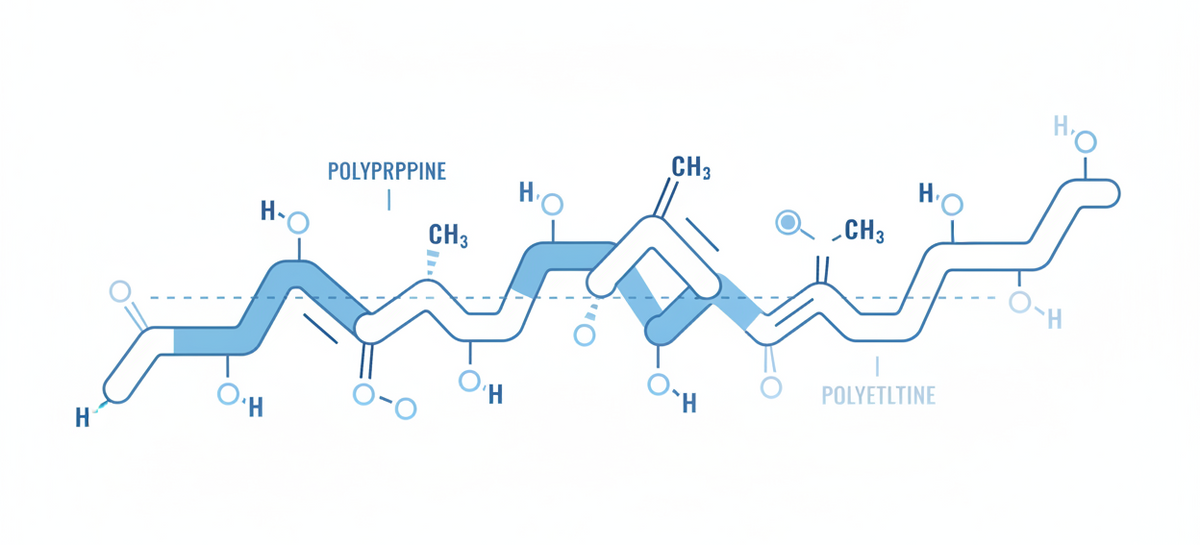
TPO is a polymer blend typically composed of polypropylene (PP), polyethylene (PE), and elastomeric modifiers. This system forms a non-polar, chemically inert matrix, which directly influences its storage stability.
1.1 Plasticizer-Free Molecular Design
TPO differs from plasticized polymers such as PVC in a fundamental way:
it contains no plasticizers or low-molecular additives required for flexibility.
This absence eliminates the most common aging pathways during storage:
- Plasticizer volatilization
- Migration into packaging materials
- Stiffening or embrittlement over time
Because the TPO matrix is composed entirely of high-molecular-weight polyolefin chains, the material maintains its flexibility and mechanical properties for extended periods when properly stored.
2. Resistance to Thermal and Oxidative Aging
Polyolefins are generally susceptible to oxidation at elevated temperatures, but modern TPO formulations incorporate:
- Primary and secondary antioxidants
- UV absorbers
- Hindered amine light stabilizers (HALS)
These stabilizers significantly delay polymer chain scission and oxidative degradation. Under typical warehouse conditions—ambient temperature, controlled humidity, and no UV exposure—the oxidation rate remains extremely low.
In practical terms, the polymer backbone does not undergo notable chemical changes when kept in storage environments below 30°C.
3. Shelf Life of TPO Coated Fabrics
Based on polymer chemistry, accelerated aging data, and long-term industry experience in roofing membranes and outdoor textiles, TPO coated fabrics exhibit a stable shelf life of approximately 2 to 3 years under standard indoor storage conditions.
Within this period:
- Mechanical properties such as tensile strength and elongation remain stable
- Surface flexibility shows no measurable decline
- Coating adhesion to the base fabric remains intact
- No visible discoloration or chalking occurs
The key requirement is that the rolls remain in original packaging, protected from UV exposure, and stored in a cool, dry environment.
4. Distinguishing Shelf Life from Outdoor Service Life
Shelf life refers only to material stability during storage. It does not represent outdoor durability.
After installation, TPO exhibits far longer life due to its inherent UV and oxidation resistance.
Field data from TPO roofing membranes—one of the harshest environmental applications—demonstrates 10 to 20 years of outdoor service life, depending on climate exposure and formulation. This long-term stability stems from:
- Slow UV-induced degradation rate
- Resistance to ozone and thermal cycling
- Absence of plasticizer loss, a common failure mode in flexible polymers
Thus, while the storage shelf life is limited by warehouse environmental variables, the installed service life is substantially longer.
5. Recommended Storage Conditions
To preserve material integrity throughout the 2–3-year shelf life, the following conditions are recommended:
- Store in a ventilated, dry warehouse
- Avoid direct sunlight and strong artificial UV light
- Maintain stable temperatures between 5–30°C
- Keep rolls sealed in protective packaging
- Avoid compression or deformation during long-term storage
Compliance with these guidelines ensures that the polymer matrix remains chemically stable and free from external degradation factors.
Conclusion
From a scientific perspective, the shelf life of TPO coated fabrics is primarily governed by its plasticizer-free polyolefin structure, oxidation-resistant formulation, and inherent chemical inertness. Under proper storage conditions, TPO maintains its physical and mechanical properties for 2 to 3 years without meaningful degradation.
Its long-term behavior in the field, however, extends far beyond this window—often reaching one to two decades—highlighting why TPO continues to replace traditional coated fabric systems in high-performance applications.
Share:
Introducing uctextile’s New Linen Embossed PVC Fabric
PVC Transparent Mesh Fabric: Performance, Applications, and Selection Guide